The Power of Constructive Feedback in Design
Design critique is a critical part of any designer's workplace, fostering growth, innovation, and collaboration. But is any feedback automatically considered a design critique?
Not necessarily.
Reflecting on personal experiences can shed light on the fine line between constructive feedback and counterproductive behavior.
What Counts as Constructive Feedback?
Some time ago, I received feedback from someone in an executive role. The feedback was delivered in a direct, non-negotiable manner. Initially, I considered it part of the job—after all, decisions often stem from overarching business goals.
However, things quickly took a different turn. The feedback lacked explanation, purpose, and clarity. When I sought to clarify the goals behind their decisions, I was met with dismissive behavior—a scornful smile instead of a thoughtful conversation. Despite taking the time to document notes and summarize design requirements, my input was ignored and met with frustration rather than engagement.
At that moment, I realized—this wasn't a design critique. It wasn't even a productive stakeholder discussion. It was an example of unprofessional and dismissive behavior that hindered collaboration rather than fostering meaningful improvement.
True design critique is not about asserting authority or shutting down ideas. It's about refining a solution with clarity, empathy, and shared objectives.
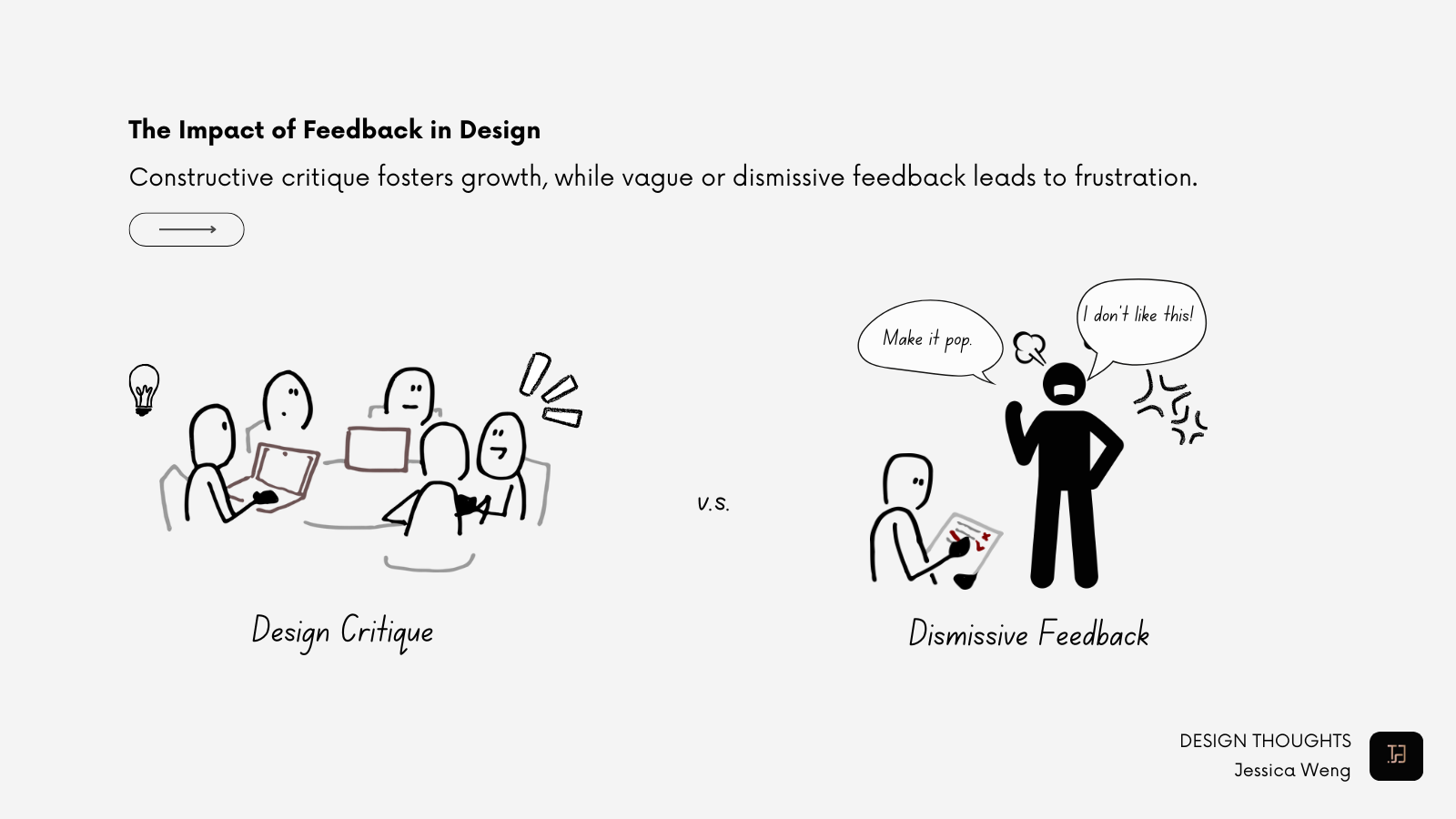
The Right Design Critique
So…it got me thinking…what's the right design critique?
Design critique: Refers to analyzing a design, and giving feedback on whether it meets its objectives." — Nielsen Norman Group
Critique is a symbiotic interaction between the presenter and the critiquers, where both parties engage in a constructive exchange that refines ideas and enhances design outcomes.
At its core, a good design critique is built on insights, clarity, and empathy. Feedback should be thoughtful and well-reasoned. It's more than personal opinions. It should also explain why something works or doesn't, regarding design goals, user needs, and constraints.
Coming from an architecture background, I learned that critiques are meant to refine a design's functionality and impact. The same principle applies to product design—whether the feedback session is formal or informal, the goal should always be to improve the design while fostering a healthy, collaborative environment.
Seeking Actual Feedback for Your Work
During one of my interviews, a lead designer asked me,
"What do you value the most during your design process?"
My answer? A meaningful critique.
A well-structured critique is not just about improving the design work—it also helps the designer grow. But getting valuable feedback is a two-way effort, requiring both the presenter and the critiquers to engage thoughtfully.
For a day-to-day design life, I try my best to keep the following principles in the loop:
1. Set the Context Clear
Giving enough information to evaluate the work is essential for having an effective design critique. For example,
- What's the primary problem the design is trying to solve?
- What are the design decision (outcome) and constraints
- What kind of feedback you're looking for (specific question to elaborate)
Using a slide deck or structuring the session based on its format can help critiquers grasp the context. When reviewers understand the bigger picture, their feedback becomes more relevant and actionable, aligning with design goals rather than personal preferences.
2. Differentiate Between Opinions and Usability Concerns
Not all feedback is equally useful.
Someone saying, "I don't like this color" is an opinion. But if they say, "This color lacks contrast and might be hard to read," that's a usability concern.
Someone saying, "I'm not sure these navigation words fit." is also an opinion. But if they say, "Given the business goal is XYZ, this wording might not apply to XYZ scenario." that's a usability concern.
Effective critique should be grounded in user experience, accessibility, or business goals rather than personal preference. Prioritizing actionable insights leads to more meaningful design improvements.
3. Foster a Culture of Open Dialogue
A good team thrives in environments where critique is encouraged, not feared. If feedback is only provided when something is "wrong," designers may become defensive rather than open to improvement. This mindset should extend beyond the design team and into the broader company culture—especially during stakeholder meetings with non-technical members. Building a culture where critique is routine, respectful, and collaborative fosters stronger designs and better overall outcomes.
Final Thoughts
Critique is an invaluable tool for growth—when done right. Reflecting on my journey and conversations with design leaders, I've learned that true design critique is rooted in purpose, fosters open discussion, and provides actionable insights. It's not about asserting authority or shutting down ideas; it's about refining and elevating the design.
Advocate for what the design process should look like during internal stakeholder meetings. Don't be afraid to champion clarity, collaboration, and constructive feedback.